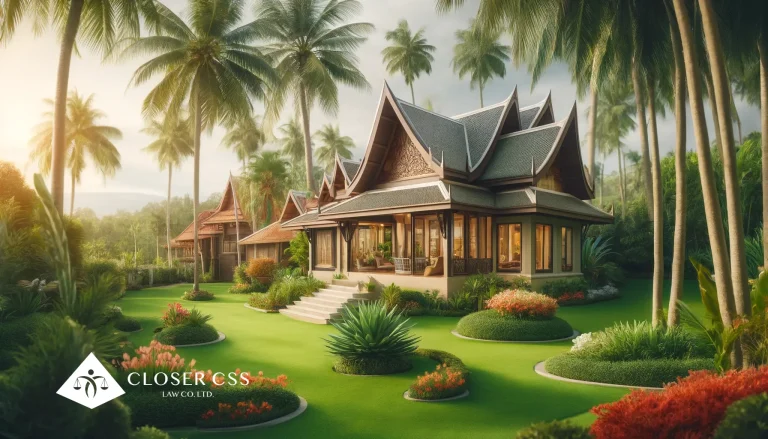

Usufruct, Lease and Superficies in Thailand Further Explained

Buying a home in Thailand with your Thai spouse or partner? Make sure you understand how to protect your investment.
Many foreigners dream of building a life in Thailand and often invest substantial amounts of money in a family home, villa, or retirement property. However, because Thai law generally restricts foreign ownership of land, many people are faced with an important question:
“If the land is not in my name, how can I legally protect my home and the money I have invested?”
The answer is not always straightforward. Thai law provides several legal mechanisms — including usufruct, lease, and superficies — each designed to provide different types of rights, protections, and security.
The right choice depends on your personal circumstances, your relationship with the landowner, the amount of your investment, your long-term plans, and what you wish to protect: your right to live in the property, your financial investment, or the ownership of the house itself.
In this particular article, we explain the differences between these legal structures, their advantages and limitations, and how they can be used individually or in combination to provide stronger protection for foreign property investors in Thailand.
Because when it comes to protecting your home and your future, the best time to make the right legal arrangements is before problems arise.
Introduction – The Challenge of Foreign Property Ownership in Thailand
Thailand is a popular destination for foreigners who wish to retire, start a family, invest, or purchase a dream home. However, one of the first legal realities every foreign buyer must understand is that Thai law generally prohibits foreigners from owning land directly.
This often creates a practical situation where the land is purchased in the name of a Thai spouse, partner, or another Thai individual, while the foreigner contributes all or part of the purchase price, finances the construction of a home, or invests substantial funds into improving the property.
Although trust and personal relationships are important, a significant financial investment should always be accompanied by proper legal protection.
Thai law provides several legal mechanisms that can protect a foreigner’s rights over land and buildings without transferring ownership of the land itself. The three most commonly used structures are usufruct, lease and superficies as explained below:
1. Usufruct – Lifetime Security and the Right to Enjoy a Property
What Is a Usufruct?
A usufruct is a real right registered over land that gives another person, called the usufructuary, the legal right to possess, use, occupy, and enjoy the benefits of that property.
In simple terms, it allows a foreigner to legally live on and use land that belongs to another person.
A usufruct may be granted for:
A lifetime usufruct is often preferred by foreigners who intend to permanently live in Thailand because it remains effective for the entire life of the holder, even if this exceeds 30 years.
The usufruct is registered at the Land Office and is recorded on the title deed, making it enforceable against future owners of the land.
What Rights Does a Usufruct Give?
A usufruct generally allows the holder to:
For example, if a foreign husband finances the family home built on land registered in his Thai wife’s name, a lifetime usufruct can provide legal security that he cannot simply be forced to leave the property.
Limitations of a Usufruct
For example, if a foreign husband finances the family home built on land registered in his Thai wife’s name, a lifetime usufruct can provide legal security that he cannot simply be forced to leave the property.
The usufructuary:
A usufruct is a personal right and automatically ends upon the death of the usufructuary.
Therefore, a usufruct is usually best suited for individuals whose primary goal is lifetime residential security.
2. Lease – Long-Term Possession and Contractual Security
What is a Land Lease?
A lease gives a person, called the lessee, the right to possess and use land owned by another person in exchange for agreed conditions.
A lease of immovable property can be registered for a maximum period of 30 years.
The lease remains valid for the agreed term, even if the owner of the land changes.
Unlike a lifetime usufruct, a lease does not automatically end because of the death of the landowner.
What Rights Does a Lessee Have?
A properly drafted and registered lease may provide the lessee with the right to:
Because a lease is contractual, the exact rights and obligations depend greatly on the wording of the lease agreement.
What is a Land Lease?
The most important limitations are:
A lease is therefore often suitable for people who seek long-term use of property for a defined period, including commercial use or investment purposes.
Feel free to contact our experienced team at Closer Law to discuss usufruct, lease, and superficies in Thailand.
We are happy to welcome you at one of our offices, arrange an online meeting, or set up a phone call at your convenience.
3. Superficies – The Right to Own the House Without Owning the Land
Limitations of a Lease
Many foreigners mistakenly believe that ownership of a house automatically follows ownership of the land.
Under Thai law, land ownership and ownership of a building can be separated.
A right of superficies allows one person to legally own a building, structure, or construction located on land owned by another person.
This is one of the most important legal tools for foreigners who pay for the construction of a house on land that is legally owned by a Thai spouse or partner.
Why Is Superficies So Important?
Imagine a situation where:
Without clear legal arrangements, disputes may arise regarding ownership of the house and the financial investment.
A properly registered right of superficies can establish that the foreign spouse owns the house separately from the land.
This creates a much stronger legal position because the investment in the building is legally recognized as a separate asset.
Duration of a Superficies
A right of superficies can generally be created:
It must be registered with the Land Office and is recorded on the land title.
4. Comparing Usufruct, Lease and Superficies
Subject |
Usufruct |
Lease |
Superficies |
|---|---|---|---|
|
Right to live on the land |
Depends on the agreement |
||
|
Maximum duration |
Lifetime or fixed term |
Maximum 30 years |
Lifetime or fixed term |
|
Ownership of land |
|||
|
Ownership of house |
|||
|
Can be inherited |
Depends on circumstances and agreement |
||
|
Registered at Land Office |
|||
|
Suitable for a spouse living in Thailand |
5. Which Structure Is Best?
There is no single solution that is best for every foreigner.
A Usufruct is often ideal if:
A Lease is often ideal if:
Superficies is often essential if:
6. The Strongest Protection Is Often a Combination of Rights
In many family situations, the best legal solution is not choosing between a usufruct, lease, or superficies, but combining them.
A common example is:
This combination provides:
7. What Happens in Case of Divorce, Death or Sale of the Land?
One of the greatest misconceptions among foreign property investors is that a marriage or personal relationship alone protects their investment.
Life circumstances can change.
A marriage may end, a landowner may pass away, or the property may be sold or inherited by other family members.
A properly registered usufruct, lease, or superficies can continue to protect the rights of the holder even when ownership of the land changes.
This is why these agreements should be carefully prepared, clearly drafted, and correctly registered at the Land Office.
7. What Happens in Case of Divorce, Death or Sale of the Land?
Investing in a home in Thailand can be a wonderful decision, but it should always be accompanied by proper legal planning.
Usufruct, lease, and superficies are legitimate legal tools that allow foreigners to secure their residence, protect their investment, and reduce future disputes.
The best solution depends on your personal situation, the amount invested, your relationship with the landowner, your family circumstances, and your long-term objectives.
Before purchasing land, paying for a house, or investing significant funds into a property owned by another person, it is advisable to obtain legal advice and establish the appropriate legal structure from the beginning.
The best time to protect your investment is before a problem ever occurs.
Stay Informed with Closer Law
Our team is ready to help you make the most of these new opportunities in Thailand. Get in Touch by sending us a message using the box in the sidebar on the right.