
Thailand Nominee Company Crackdown 2026: What Foreign Property Owners Must Know
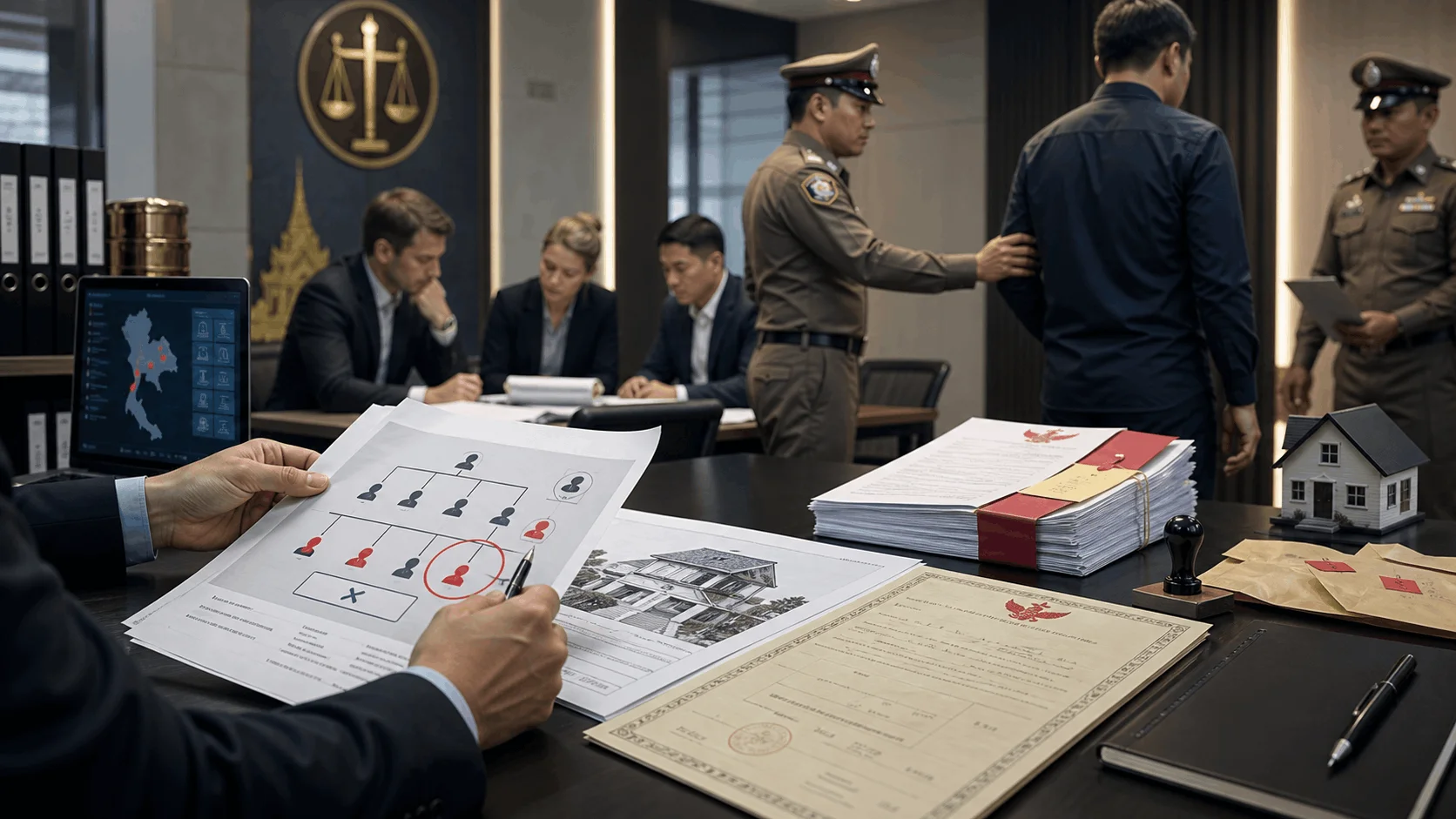
Thailand has always been attractive to foreign property buyers. Phuket, Koh Samui, Bangkok, Hua Hin, Pattaya and Chiang Mai continue to draw investors, retirees, business owners and families who want a home, villa, resort asset or long-term base in Thailand. But in 2026, the Thailand nominee company crackdown 2026 issue has become impossible to ignore: the renewed focus on nominee structures and foreign-controlled Thai companies used to hold land.
For many years, foreigners were told that buying property through a Thai company, land ownership was “standard practice”. The explanation often sounded simple: the company is 51% Thai-owned, 49% foreign-owned, and therefore the structure is safe. Unfortunately, that explanation is incomplete and, in many cases, quite dangerous.
Under Thailand property law for foreigners, the real issue is not only what appears on paper. Authorities may also look at who provided the money, who controls the company, who benefits from the property, whether the Thai shareholders are real investors, and whether the company conducts genuine business. A company that looks Thai on paper may still be treated as a Thai nominee company if the Thai shareholders are only holding shares for the foreigner.
The Foreign Business Act Thailand expressly targets nominee shareholding where Thai persons hold shares to allow foreigners to avoid legal restrictions. Penalties can include imprisonment, fines, and court orders to stop the structure or business activity.
What is a nominee shareholder Thailand situation?
A nominee shareholder Thailand situation usually means that a Thai person or Thai company appears as a shareholder, but does not act as a real owner. The Thai shareholder may not have paid for the shares, may not receive real dividends, may not participate in decisions, and may have signed side documents giving control back to the foreigner.
In property cases, the structure often looks like this:
A foreigner wants to buy land in Thailand. Because direct foreign land ownership Thailand is generally restricted, a Thai limited company is created. Thai shareholders are listed with 51% or more of the shares. The foreigner holds 49%, funds the purchase, controls the bank account, uses the villa, rents it out, makes all decisions, and treats the land as their personal asset.
This is where the legal risk begins. Thai company land ownership is not illegal by itself. A genuine Thai company may own land if the company is properly formed, properly funded, genuinely Thai-controlled, and operates within the law. But a company created mainly to hold land for a foreigner, with Thai shareholders who are not real economic owners, can become a serious legal problem.
The Department of Lands also publishes official information for foreigners regarding land acquisition, including the limited Section 96 bis residential exception and measures concerning land held on behalf of foreigners. See this link for the Department of Lands.
Why 51% Thai shareholding is not automatically safe
One of the most common misunderstandings in foreigner buying land Thailand cases is the idea that “51% Thai ownership” solves everything. It does not.
The 51/49 structure may only answer one very basic question: what does the shareholder register say?
It does not answer the deeper legal questions:
Authorities are increasingly aware that nominee structures often use the same patterns: repeated Thai shareholders across many companies, identical registered addresses, accounting offices providing “shareholders”, foreigners controlling all business decisions, or Thai shareholders with no financial capacity to invest.
The DBD nominee crackdown is therefore not only about percentages. It is about substance. The Department of Business Development’s 2025 foreign business report identified nominee shareholding investigations in high-risk sectors including tourism, land trading and real estate, hotels and resorts, agriculture-related businesses, logistics/e-commerce, and construction.
What authorities may check
In the current DBD nominee crackdown or the nominee investigation that is active in Thailand right now, authorities may look beyond the company affidavit.
They may examine:
Recent announcements regarding the DBD nominee crackdown show a clear official focus on higher scrutiny of companies with foreign involvement, including risk sectors such as real estate, hotels, resorts, tourism and construction.
What foreign property owners should review now
Foreign owners who already hold land or villas through a Thai company should not panic, but they should review the structure properly. The worst approach is to ignore the issue until a bank, Land Office, accountant, buyer, police officer, DBD officer or litigation opponent raises it.
A proper review should include:
A real estate lawyer Thailand should not only ask whether the company is 51% Thai. The proper question is whether the company can survive a substance-based review.
For Phuket property owners, this is especially important. Foreign buyers and villa owners should have their structure reviewed by a qualified property lawyer in Phuket, not only to assess the landholding arrangement, but also to review how the property is actually being used.
Many owners are exposed not only through Thai company land ownership or nominee shareholder structures, but also through short-term rental activity, hotel license requirements, construction permits, tax compliance, and villa management agreements.
Property Lawyer Phuket
Own property in Thailand through a company or Thai partner?
Make sure your structure is legally safe. Closer Law, acting as your real estate lawyer in Thailand, reviews foreign property ownership, nominee risks, land agreements, rental use, licenses, tax exposure, and villa management arrangements in Phuket and across the country.
Legal alternatives to risky nominee structures
Foreigners cannot simply convert every structure overnight, and each case must be reviewed individually. However, there are safer legal tools.
1. Condominium freehold
A foreigner may own a condominium unit freehold in their own name if it falls within the foreign quota and the funds are properly brought into Thailand. This is often the cleanest ownership route for foreign buyers.
2. Registered Lease
A lease agreement Thailand foreigner structure can provide long-term use rights. For immovable property, leases exceeding three years should be registered with the Land Office to be enforceable beyond three years. A lease does not create land ownership, but when drafted properly it can provide practical security.
3. Usufruct
Usufruct Thailand arrangements can give the foreigner the right to possess, use and enjoy benefits from immovable property owned by another person. This is often used between spouses, partners or family structures, but it must be carefully drafted and registered.
4. Superficies
Superficies Thailand can separate ownership of a building from ownership of the land. In simple terms, the foreigner may own the structure while another person owns the land. This can be useful in certain house or villa structures when properly registered.
5. Genuine Thai company
Thai company land ownership may be lawful when the company is genuinely Thai-owned, properly funded, commercially active, and not created as a disguised vehicle for foreign land ownership. This requires real shareholders, real capital, real governance and real business purpose.
6. BOI or specific legal permissions
Certain promoted businesses may receive land ownership privileges under specific investment laws, but these are not ordinary residential villa structures. They require proper legal and regulatory approval.
How to avoid nominee problems
Foreigners cannot simply convert every structure overnight, and each case must be reviewed individually. However, there are safer legal tools.
Foreign buyers should:
A Property Lawyer Phuket clients instruct should be able to explain the legal structure in plain English, identify the red flags, and provide a written risk assessment before money changes hands.
How to avoid nominee problems
If you suspect that your company may be a Thai nominee company, do not start transferring shares, changing directors, backdating documents or creating artificial evidence. That can make the situation worse.
The correct first step is a confidential legal audit. The audit should identify:
Every case is different. A foreign retiree living quietly in a house, a villa rented daily on Airbnb, and a property development company selling units to foreigners all carry different levels of risk.
Final Practice Advice
The Thailand nominee company crackdown 2026 should be understood as a warning: structures that were sold for years as “normal” may no longer be safe if they were never legally sound in the first place.
Foreign owners should speak with a property lawyer in Phuket before relying on a Thai company land ownership structure and should not assume that a 51% Thai shareholder structure protects them. They should ask whether the Thai shareholders are real, whether the company is real, whether the business is real, and whether the structure can be defended if investigated.
For anyone involved in foreign land ownership Thailand, Thai company land ownership, or foreigner buying land Thailand, the message is clear: compliance must come before convenience.
A carefully drafted lease, usufruct, superficies, condominium purchase, or genuinely compliant business structure may not sound as simple as “open a Thai company and buy the land”. But it is far safer than discovering later that the company was never truly Thai in substance.
If you already own property through a Thai company, now is the time to review it. If you are planning to buy, now is the time to structure it correctly from the start.
Stay Informed with Closer Law
Our team is ready to help you make the most of these new opportunities in Thailand. Get in Touch by sending us a message using the box in the sidebar on the right.